Oklahoma
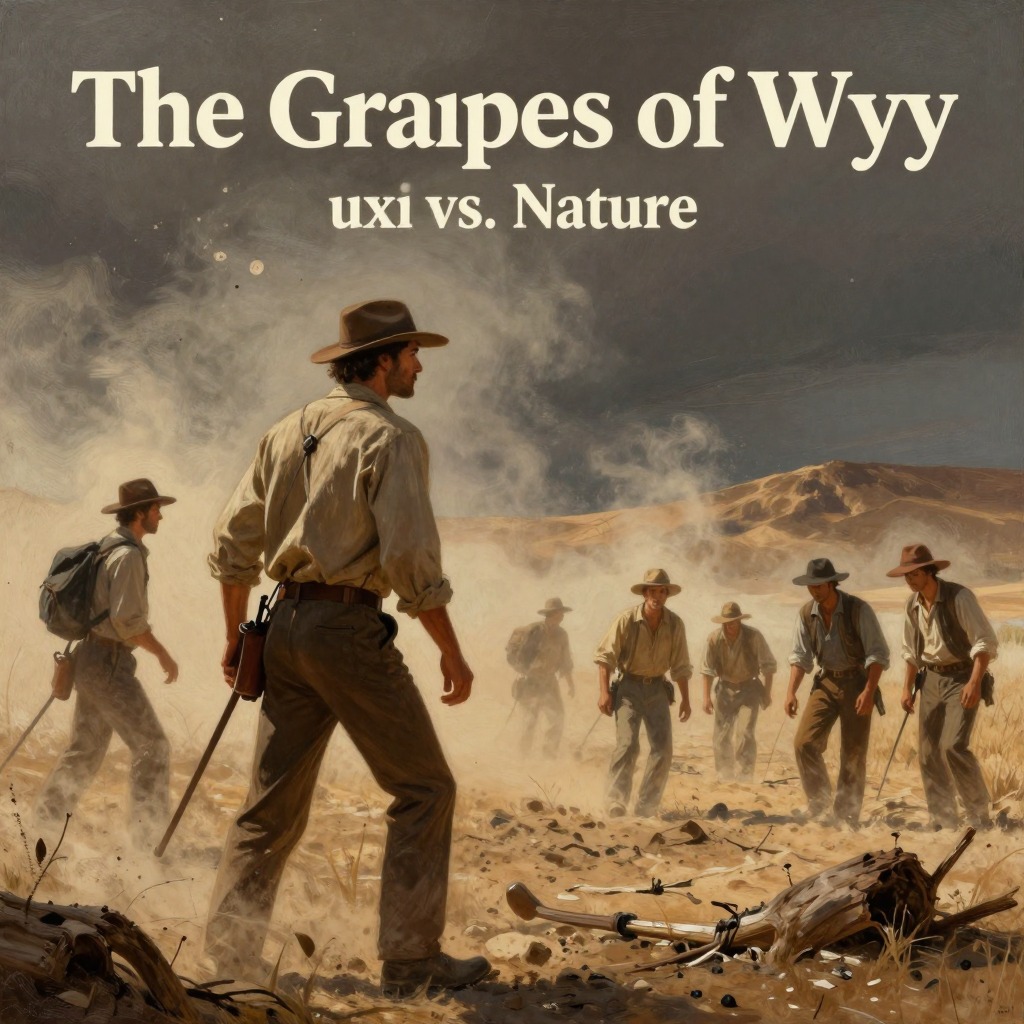
Oklahoma is the Dust Bowl state from which the Joad family is driven, serving as the novel's geographic and symbolic origin of displacement, loss, and the mass migration westward. The opening chapters depict a landscape in ecological collapse: the red and gray country of Oklahoma, where the last rains came gently and did not cut the scarred earth, and where the sun flared down on the growing corn day after day until a line of brown spread along the edge of each green bayonet. The dust storms that follow—the wind growing strong and hard, working at the rain crust in the corn fields, carrying the dust away in gray plumes like sluggish smoke—destroy the crops and force the tenant farmers off the land. The people huddle in their houses, tying handkerchiefs over their noses and wearing goggles to protect their eyes, while the dust settles like pollen on chairs and tables, on the dishes. The men stand by their fences and look at the ruined corn, drying fast now, only a little green showing through the film of dust. The women study the men's faces secretly, for the corn could go, as long as something else remained. After a while the faces of the watching men lose their bemused perplexity and become hard and angry and resistant. Then the women know that they are safe and that there is no break. This is the land that Grampa Joad refuses to leave, declaring, "This here's my country. I b'long here. An' I don't give a goddamn if they's oranges an' grapes crowdin' a fella outa bed even. I ain't a-goin'. This country ain't no good, but it's my country." The land is also the site of the Joad farm, where Tom Joad returns after four years in McAlester prison to find the house mashed at one corner, pushed off its foundations, the fences gone, and cotton growing in the dooryard. The tractor eviction has already happened, and the family has moved to Uncle John's place, preparing to leave for California. Oklahoma is the first state left behind on the migrant road: Highway 66 runs from Oklahoma City through El Reno, Clinton, Hydro, Elk City, and Texola, and there's an end to Oklahoma. The people in flight stream out on 66, refugees from dust and shrinking land, from the thunder of tractors and shrinking ownership. The state represents the past—the lost home, the buried Grampa, the abandoned land—that the migrants carry with them as bitterness and memory. When Tom Joad tells the truck driver he is from Oklahoma, the driver's questions have the tone of a subtle examination, spreading nets, setting traps. The state's identity becomes a stigma: in California, the word "Okie" is used as an epithet, meaning a dirty son-of-a-bitch, scum. The novel traces the transformation of Oklahoma from a specific place into a symbol of the dispossessed agrarian folk who have not changed with industry, who have not farmed with machines or known the power and danger of machines in private hands. The land itself—the red country and the gray country, the water-cut gullies, the corn fields beaten down by wind and heat and drought—is the first casualty of the ecological and economic forces that set the migration in motion.